
Step 6
Processing & Value Addition
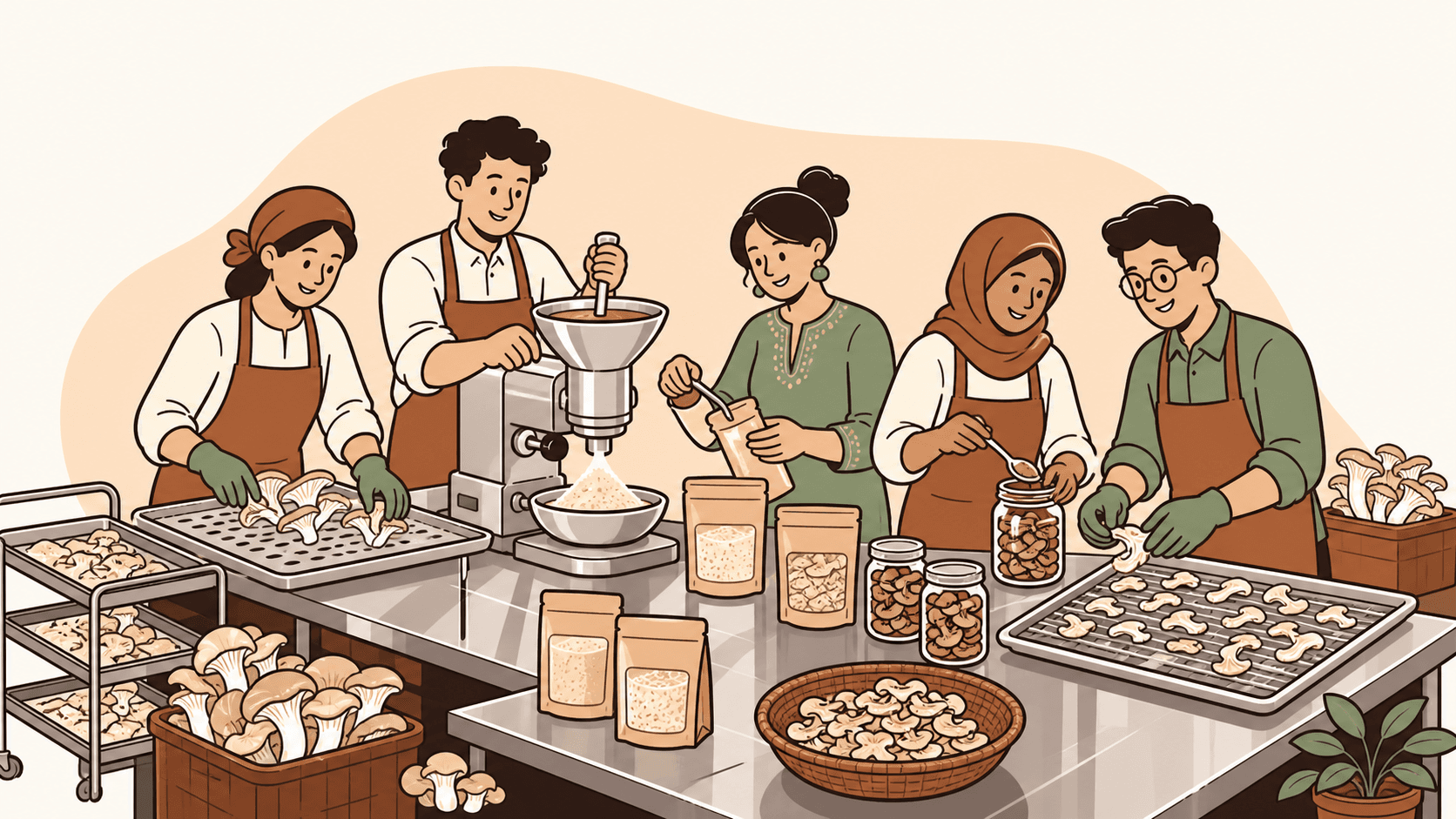
Processing turns fresh mushrooms into value-added food formats that can travel further, last longer, and reach more customer segments.
Ecosystem role
How this step supports the Cokoon model.
Processing and value addition help extend the usefulness and market potential of mushrooms beyond the short selling period of fresh produce. Suitable raw materials can be transformed into powders, soup mixes, nutrition mixes, pickles, snacks, dried products, ready-to-cook formats, and other practical foods for homes and businesses.
Product selection begins with a clear understanding of the customer, intended use, ingredient availability, production method, shelf-life objective, packaging format, price point, and sales channel. Cokoon focuses on food formats that are practical to produce, easy to understand, and relevant to retail, institutional, hospitality, or bulk buyers.
Processing requires disciplined control of raw material quality, cleaning, preparation, temperature, time, moisture, hygiene, equipment, handling, and storage. Standardised methods help reduce variation between batches and support more consistent taste, texture, appearance, and product performance.
Value addition can create alternative uses for mushrooms that may not be suited to premium fresh presentation but still meet the required processing quality. When planned responsibly, this can reduce post-harvest waste, improve the utilisation of farm output, and create additional market opportunities across the supply chain.
Product trials, sensory evaluation, costing, food testing, packaging assessment, labelling, and small-batch market feedback are important before wider commercial production. Cokoon encourages partners to validate each stage rather than move directly from an idea to large-scale manufacturing.
Within the Cokoon model, processing converts farmer-linked production into a broader portfolio of market-ready foods. It supports longer selling periods, diversified revenue opportunities, institutional partnerships, and stronger demand for mushroom raw materials while giving consumers more convenient ways to include mushroom-based ingredients in everyday meals.
What it includes